
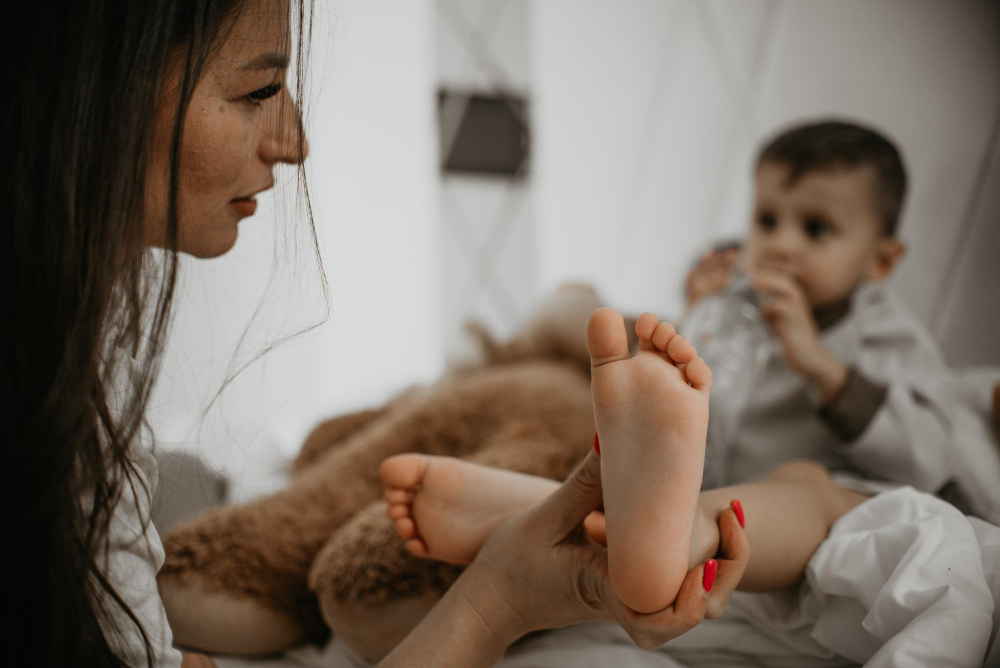
Flat feet in children are common and often cause concern for parents. Many families worry about their children’s foot health and wonder if flat feet will affect walking or running. In this blog, you will learn about flat feet in children, including symptoms, causes, diagnosis, and the best pediatric flatfoot treatment options. Understanding how to help kids with flat feet can make a big difference in their comfort and activity levels.
What Are Flat Feet in Children?
Flat feet, also called fallen arches, happen when the arches on the inside of the feet do not develop or are very low. As a result, the entire sole touches the ground when your child stands. Usually, babies and toddlers have flat feet because their arches are not fully formed. However, most children develop arches by age six. Still, some kids keep flat feet as they grow older. In many cases, flat feet do not cause pain or problems. Yet, some children may feel discomfort or have trouble with certain activities.
Common Symptoms of Flat Feet in Children
Not all children with flat feet have symptoms. But some signs may show up as your child grows. For example, you might notice:
Sometimes, children may avoid running or jumping because their feet hurt. If you see these signs, it is important to talk to a doctor.
Causes of Flat Feet in Children
There are several reasons why children may have flat feet. Most often, it is a normal part of growth. For instance, babies are born with soft tissues in their feet, and arches form over time. However, some causes include:
According to the American Academy of Pediatrics, most flat feet in children are flexible and not linked to serious health issues.
Diagnosis: How Doctors Identify Flat Feet
Doctors use a simple exam to check for flat feet in children. First, they look at your child’s feet while standing and walking. Next, they may ask your child to stand on tiptoes. If the arch appears when standing on tiptoes, the flat feet are flexible. Sometimes, doctors use X-rays to rule out bone problems. In most cases, no special tests are needed. However, if your child has pain or trouble walking, further tests may help find the cause.
Treatment Options for Flat Feet in Children
Most children with flat feet do not need treatment. However, if your child has pain or trouble with activities, several options can help. For example:
Surgery is rarely needed and only for severe cases. According to the CDC and leading pediatric journals, most children outgrow flat feet without problems. Still, regular check-ups with a pediatric specialist can help track your child’s foot health.
Lifestyle Tips and Prevention
There are simple ways to support your child’s foot health. For instance, you can:
While you cannot always prevent flat feet, these steps can help reduce discomfort and support healthy growth. If you live in a city with many parks or sports programs, take advantage of these resources for your child’s activity.
In summary, flat feet in children are common and usually not a cause for worry. However, if your child has pain or trouble with daily activities, consult a pediatric specialist Dr. Narender Reddy for personalized advice on flat feet in children.