
Introduction
Hand, foot, and mouth disease (HFMD) is a common illness in young children. Understanding the causes of hand, foot, and mouth disease helps parents protect their kids. Because this disease spreads easily, knowing how it starts and spreads is important for every family.
What Is Hand, Foot, and Mouth Disease?
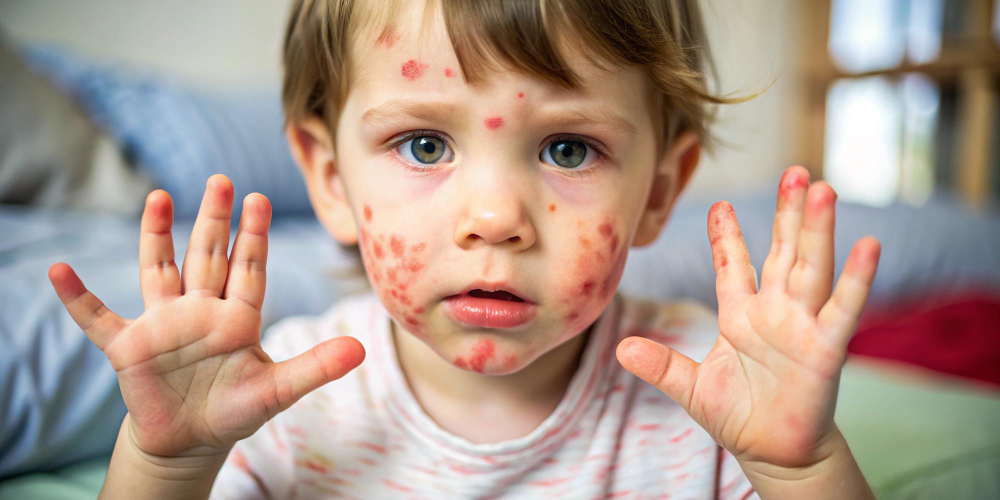
HFMD is a mild but contagious childhood disease. It causes sores in the mouth and a rash on the hands and feet. Usually, it affects children under five years old. However, older kids and adults can get it too. Most children recover without problems, but the illness can be uncomfortable.
Main Causes of Hand, Foot, and Mouth Disease
HFMD is caused by viruses. The most common ones are coxsackievirus A16 and enterovirus 71. These viruses belong to a group called enteroviruses. Because these viruses spread easily, outbreaks often happen in places where children gather.
Children are at higher risk because their immune systems are still developing. Also, they often touch their faces and put things in their mouths. According to the CDC, outbreaks are most common in childcare settings and schools.
How Children Get Infected
Children can catch HFMD in many everyday places. For example, schools, playgrounds, and daycare centers are common spots for the virus to spread. Because kids play close together, germs move quickly from one child to another.
Some behaviors increase the risk of infection:
Even though adults can carry the virus, they may not show symptoms. Still, they can pass it to children.
Prevention Tips for Parents
Parents can help lower the risk of HFMD. While it is hard to avoid all germs, these steps make a big difference:
Because prevention is key, remind children about good hygiene every day.
When to Seek Medical Advice
Most cases of HFMD are mild. However, some symptoms need a doctor’s attention. For instance, call your pediatrician if your child:
Early medical care can help prevent complications.
Conclusion & Call-to-Action
In summary, hand, foot, and mouth disease in children is caused by common viruses. Because it spreads easily, knowing the causes and how to prevent infection is important. Simple hygiene steps can protect your family. Consult a pediatrician for personalized guidance if you suspect your child has hand, foot, and mouth disease.